Wondering about VR vs. laser tag? Compare traditional laser tag and VR laser tag, from gameplay and immersion to multiplayer experiences.

VR vs. Laser Tag: What’s the Difference?
Laser tag has been a go-to group activity for decades, but virtual reality has changed what a blaster battle can look like. While a traditional laser tag game puts players on different teams in a physical arena with a blaster, VR can transport the same basic concept into an entirely virtual environment.
Both involve movement, competition, and teamwork, but the technology and gameplay create distinct experiences. So, when it comes to VR vs laser tag, what actually sets the two apart? Both can get your group moving and working together, but how you interact with the game is where they really diverge. The biggest difference comes down to where the game takes place and how much the technology can change the experience.
Keep reading, and we’ll help you understand the differences and choose the best option for your group outing.
Table of Contents
VR vs Laser Tag at a Glance
Laser Tag vs VR: How Are They Different?
Immersive Opportunities: Laser Tag or VR?
Is VR or Laser Tag More Physical?
Is Laser Tag or VR Easier to Learn for Beginners?
Is VR or Laser Tag Better for Groups?
VR vs Laser Tag for Team Building
What Should You Look for in a VR Experience?
Try Multiplayer VR at Sandbox VR
FAQs
VR vs Laser Tag at a Glance
Laser tag is a multiplayer game played in a physical arena. Players typically wear sensor-equipped vests and carry infrared-emitting blasters, then move through the arena, trying to tag opposing players while avoiding being tagged themselves.
Virtual reality takes a different approach by using a headset and other technology to create a digital environment around the player. Instead of looking at a physical arena, players see a virtual world and interact with it using tracked movements and equipment.
Modern multiplayer VR can go well beyond simply putting a screen in front of your eyes. Depending on the experience, technology can track players’ movements, incorporate physical props, and use haptic feedback to create sensations that correspond with what’s happening in the virtual world.
The result is entertainment that can feel more like stepping into a game than playing one from the outside. Players can explore environments that would be difficult to build physically and take part in experiences that aren’t possible in a typical entertainment venue.
Laser Tag vs VR: How Are They Different?
The biggest difference between VR and laser tag is where the activity takes place. Laser tag uses a physical arena, while VR creates a digital environment that players experience through a headset.
That difference affects almost everything else about the experience. A laser tag arena has a fixed layout, while a VR experience can transport players to completely different settings without changing the physical room. Laser tag generally centers on tagging opponents, while VR experiences can include exploration, combat, puzzles, storytelling, and cooperative missions.
Laser Tag | Virtual Reality | |
Environment | Physical arena | VR room with a digital environment |
Equipment | Blaster and sensor-equipped vest | VR headset and tracked equipment |
Movement | Navigate a physical arena | Physical movement represented in VR |
Gameplay | Primarily tag-based competition | Can include exploration, combat, puzzles and missions |
Setting | Determined by the physical venue | Can change between virtual worlds |
Multiplayer | Competitive or team-based | Cooperative or competitive, depending on the experience |
Immersion | Physical environment and effects | Virtual environment, tracking, audio, and haptics |
There is some overlap between the two activities, but both can get people moving, encourage teamwork, and create a social experience that is very different from sitting at home playing a game alone.
Immersive Opportunities: Laser Tag or VR?
Immersion can mean different things depending on the experience, but VR has a clear advantage in changing what players see and interact with. Laser tag can create an engaging atmosphere with physical scenery, lighting, sounds, and special effects. You’re still physically aware of the arena around you, though.
Virtual reality can replace that visual environment entirely. Instead of seeing the room's walls, you might see a completely different world through your headset. When motion tracking, spatial audio, haptics, and physical props are incorporated, the technology can make the virtual environment feel more responsive to your movements.
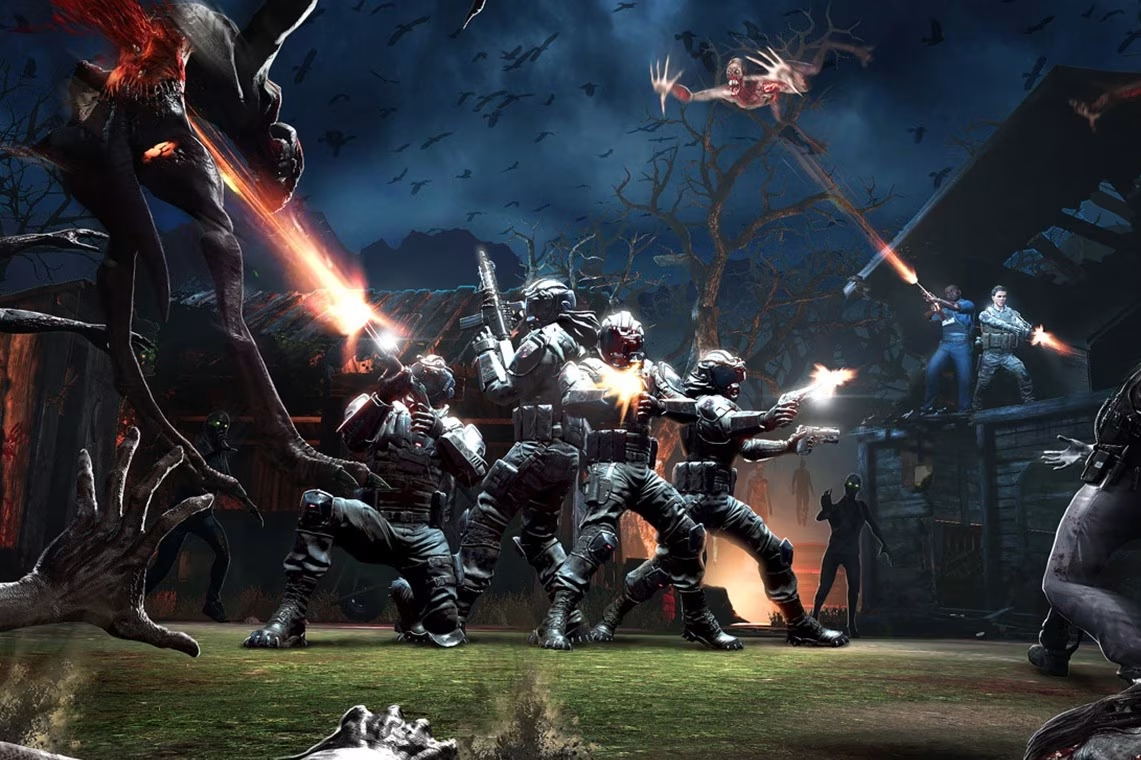
For example, Sandbox VR’s Deadwood Valley puts players in a Wild West-inspired world where they have to work together to survive a zombie outbreak. Instead of running through a physical arena dressed up as a Western setting, the environment itself becomes part of the virtual experience, from the setting to the enemies coming at your group.
Is VR or Laser Tag More Physical?
Both activities involve movement, but the type and amount of physical activity can vary.
Laser tag usually has players moving continuously through an arena. Running, crouching, taking cover, and moving between obstacles are all part of navigating the physical space. The arena layout also influences how much players move and how they approach the game.
VR can be physical too, particularly when an experience uses room-scale or free-roam gameplay. Players may walk, turn, reach, crouch, and interact with the virtual environment using their own bodies. However, not every VR experience has the same physical demands, so it’s worth checking what you’ll actually be doing before booking.
Is Laser Tag or VR Easier to Learn for Beginners?
Laser tag has a very short learning curve. Most people understand the basic concept almost immediately: use your blaster, find other players, and try not to get tagged.
VR can involve more equipment, but that doesn’t necessarily make it difficult to learn. Most dedicated VR venues provide an orientation before the experience begins, allowing players to learn how the equipment works and what they need to do.

The gameplay itself can also vary. Some VR experiences focus on straightforward action, while others involve exploration, puzzles, storytelling, or teamwork. That variety gives groups with different gaming backgrounds and interests options.
Is VR or Laser Tag Better for Groups?
Both laser tag and VR are social experiences, but they bring groups together in different ways.
Laser tag centers on competition, where players can divide into teams, develop strategies, communicate during the game, and compete for points. Because the rules are simple, groups can get started easily without much exploration.
Multiplayer VR can be more cooperative, so instead of competing against people in the room, players can share an objective that requires communication and teamwork. Everyone experiences the same virtual world while seeing the action from their own perspective.
That makes both options work for birthdays, friend groups, corporate outings, and other group events. The better fit depends on whether your group wants straightforward physical competition or a more immersive shared adventure.
Planning a birthday party, group outing, or team activity?
Sandbox VR gives your group a chance to experience something together that you can’t get from just a typical night out. Find a Sandbox VR location near you and choose your next adventure.
VR vs Laser Tag for Team Building
Both activities can encourage communication and teamwork, but groups may work together differently.
In laser tag, teams typically develop strategies based on the physical arena. Players have to communicate about where opponents are, decide how to move through the space, and adjust their strategy as the game progresses.
Multiplayer VR can create similar opportunities in a completely different setting. Depending on the experience, players may need to communicate throughout a mission, coordinate their actions, solve problems together, or respond to unexpected events in the virtual world.
For groups that enjoy story-driven experiences, Stranger Things: Catalyst takes that idea even further. Players step into Hawkins Lab and the Upside Down, working together as they move through a story inspired by the series. It’s a different kind of group activity than competing for the highest laser tag score because the group is also part of the story.
What Should You Look for in a VR Experience?
If you’re searching for VR vs laser tag near you, look beyond whether a venue uses "VR" in its name. Different virtual reality venues offer very different experiences, and that can make all the difference.
Consider how many people can play together, whether the experience is cooperative or competitive, how much physical movement it involves, and what technology the venue uses. Full-body tracking, haptic feedback, physical props, and room-scale gameplay can create a substantially different experience from a seated VR game.
It’s also worth checking the actual lineup of experiences. Some venues focus on arcade-style VR, while others, like Sandbox VR, specialize in longer, multiplayer experiences designed for groups.

Try Multiplayer VR at Sandbox VR
If you’re interested in virtual reality but aren’t necessarily looking for a laser tag experience, Sandbox VR offers another way to approach group entertainment. Its multiplayer experiences put players inside shared virtual worlds, with technology that tracks their movements and connects physical actions to what’s happening in the game.
Sandbox VR uses full-body motion capture, haptic feedback, and physical props to create immersive multiplayer experiences. Available experiences vary, so check your nearest Sandbox VR location to see which games are currently offered.
Whether your group wants to take on zombies in Deadwood Valley, compete in Squid Game Virtuals, or explore the world of Stranger Things, the experiences go well beyond the straightforward tag-and-score format of laser tag. Book an experience now at your nearest Sandbox VR location.
FAQs
Is VR more immersive than laser tag?
VR can create a different level of immersion by replacing the player’s visual surroundings with a digital environment. Technologies such as motion tracking, spatial audio, and haptic feedback can make the virtual world respond to players’ movements and actions. Laser tag can also create an immersive atmosphere through physical scenery, lighting, sound, and special effects.
Is VR more physical than laser tag?
Both can involve significant movement, but the type and amount of physical activity depends on the specific experience. Laser tag typically involves running, crouching, and navigating obstacles throughout a physical arena. Some VR experiences also involve walking, turning, reaching, crouching, and other movements, particularly when they use room-scale or free-roam gameplay.
Can you play VR with a group, similarly to laser tag?
Yes, many Sandbox VR experiences support up to six players, letting them share the same virtual environment and interact with one another during gameplay. Sandbox VR’s experiences are built around multiplayer gameplay, with groups entering the same virtual world and experiencing the action together.
Other Articles

Indoor Winter Activities to Beat Cabin Fever | Sandbox VR
Indoor winter activities for adults, kids, and groups, from climbing gyms and museums to full-body virtual reality at Sandbox VR.

Best Things to Do in Chicago This Weekend | Sandbox VR
Looking for the best things to do in Chicago this weekend? Explore immersive VR, colorful art, skyline views, and photo-worthy spots around the city.